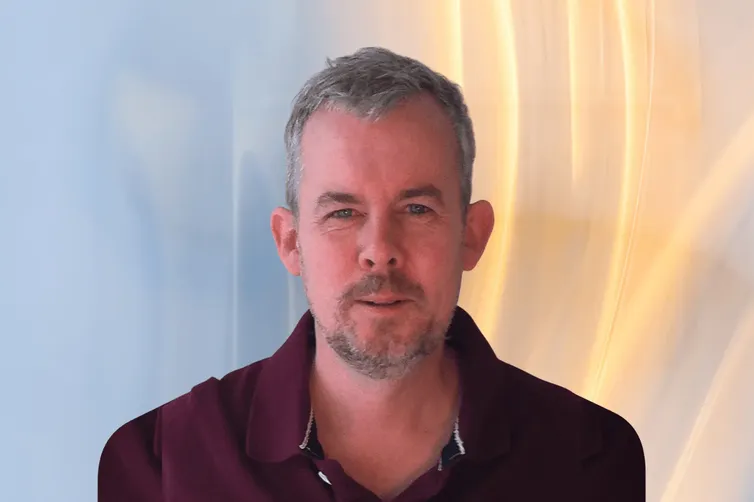
In just 18 months, Kenneth Hotz, Director and Head of Fundraising at Alzheimer Life, has helped build up fundraising that has grown sixfold in the past year, since tracking began in Octany. They’ve done it without big resources: the foundation is run by three people and a few volunteers. Today their campaign has gathered over 40,000 signatures, and their seminars are fully booked.
My background is in civil society and international development. I started out early as an entrepreneur in civil society, and worked with Clowns Without Borders, among others. There I helped build the organisation up from almost no money into a proper operation.
After that I spent several years in international development in different countries, where I led large projects funded by Sida (the Swedish International Development Cooperation Agency) and developed partnerships. In recent years I’ve worked as a consultant, mainly doing evaluations for other organisations.
A relative of mine has Alzheimer’s, and that’s how I got involved with Alzheimer Life around 18 months ago. Back then, Alzheimer Life was a small non-profit with no employees.
Together with Henrik Frenkell, I set about building it into what it is today. I’ve always been driven and creative, and I love the building-up phase. Today I’m the director and responsible for fundraising.
It’s all thanks to Henrik Frenkell, who leads our editorial work. In 2020 he was diagnosed with Alzheimer’s, a diagnosis that later turned out to be wrong. He’s a journalist, and he started writing about his own situation. He blogged and recorded podcast interviews with doctors. He soon realised that many people affected were missing information and support. Alzheimer Life grew out of that.
At its heart is our editorial work, where we and our writers share what it’s like to live with the disease or care for someone who does. We also do a lot of campaigning. For example, we’re pushing the question of why Swedish patients can’t get approved Alzheimer’s medicines that are used elsewhere in the EU. Doctors and pharmaceutical companies often tell us we’ve become a leading voice in the field. We share news about research, help and support, and we run lots of seminars, which are always fully booked.
Others in the sector recommended Octany to us. What won us over was the friendly service, the technical know-how and how quickly you respond. It feels like you’re always developing.
That you listen and build new features when we give feedback. Your seminars are brilliant. A short, quick bit of input is enough to get you going. We ran a Mother’s Day campaign because of one.
The first thing is to find a campaigning nerve, something you want to change in society. It needs public pressure to bring about that change, and then you link your fundraising to it. Why does this matter? Your language has to work for both the people affected and the general public, so everyone understands. That’s exactly how it was for us.
When we started, we honestly didn’t know if people would want to give money to what we do. But we kicked off a campaign to make the medicines available, and asked straight out: Does this matter to you? Are you affected yourself? Would you like to become a monthly donor? Today we have over 40,000 signatures. Campaigning became our foundation.
After that, it’s about keeping the information coming for the people affected. Show what you do, and keep the quality high. That’s how you build trust. Try lots of things. Doing and testing is the best way. We reach people because we’re working and active all the time. Doing too much is a weakness of ours too, but we’re constantly moving. Don’t stand still.
One challenge is that people are often wary of clicking on fundraising links. Email is easier, because there you can reply in a different way.
In the end, it comes down to you and me, the human side and what we create together. Octany helps a lot here. You need resources to raise money. If people want to give, it’s worth putting resources into fundraising.
What I’ve done with Octany is bring everything together in one place. I don’t want lots of platforms to log in to with different passwords. It just gets messy. And you’re launching your CRM soon, aren’t you? I’m interested in that.
Now that we can see our fundraising is working, we’re starting to look three years ahead. We’ll carry on with our editorial work, seminars and campaigning. Our fundraising has grown sixfold in just one year, so we’re heading in the right direction. We want to keep giving our donors peace of mind.